<a href='/tag/trunnion-mounted-ball' target='_blank' class='key-tag'><font><strong>trunnion Mounted Ball</strong></font></a> Valve vs <a href='/tag/floating-ball' target='_blank' class='key-tag'><font><strong>Floating ball</strong></font></a> Valve Torque Comparison
Trunnion Mounted Ball Valve vs Floating Ball Valve Torque Comparison
Trunnion mounted ball valves and floating ball valves are two of the most widely used designs in industrial
piping systems. Understanding their torque requirements, design principles, sealing behavior, and application
limits is essential for engineers, end users, EPC contractors, and valve distributors. This in‑depth guide
focuses on trunnion mounted ball valve vs floating ball valve torque comparison and explains
how valve design directly affects operating torque, actuator sizing, safety, and lifecycle cost.
1. Overview of Ball Valve Torque
Ball valves are quarter‑turn valves that rotate a ball with a through bore to open or close flow. The
valve torque is the rotational force required to turn the ball from fully open to fully
closed (and vice versa) under specific operating conditions. Torque is a critical parameter for:
- Manual operation (handwheel or lever sizing)
- Actuator selection (pneumatic, electric, or hydraulic)
- Stem design and strength verification
- ISO 5211 mounting pad selection
- Operational safety and reliability
In general, trunnion mounted ball valves exhibit lower and more predictable torque than
floating ball valves, especially in large sizes, higher pressures, and dirty or high‑differential
pressure services. This torque comparison is the primary reason why trunnion mounted ball valves are preferred
for demanding pipeline and process applications.
2. Definitions and Basic Design Concepts
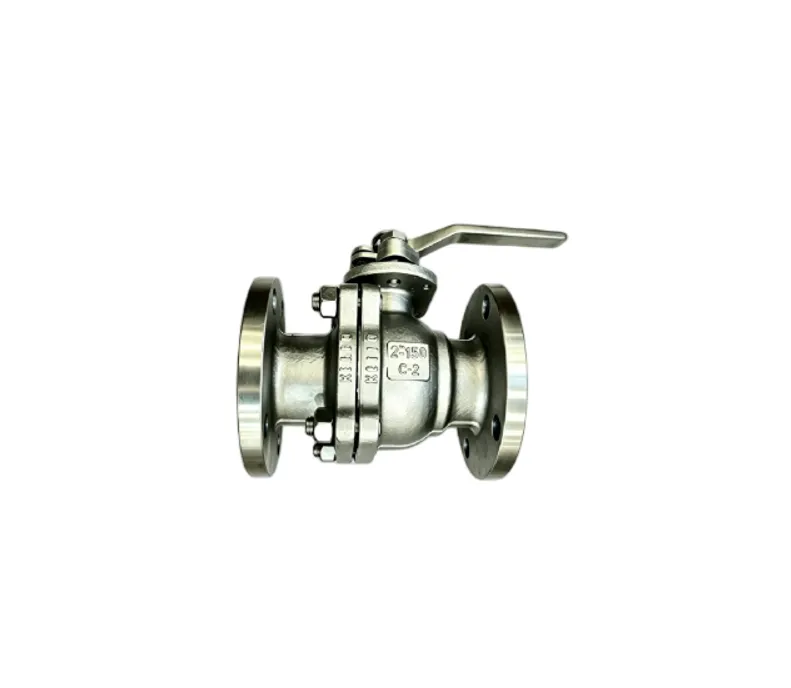
2.1 What Is a Floating Ball Valve?
A floating ball valve is a ball valve design in which the ball is not rigidly held in place
by trunnions. The ball is supported by:
- Two valve seats (upstream and downstream)
- The stem connection at the top of the ball
Under differential pressure, the ball is free to move slightly downstream, pressing against the downstream
seat to achieve tight sealing. The sealing force is generated by line pressure pushing the ball into the seat.
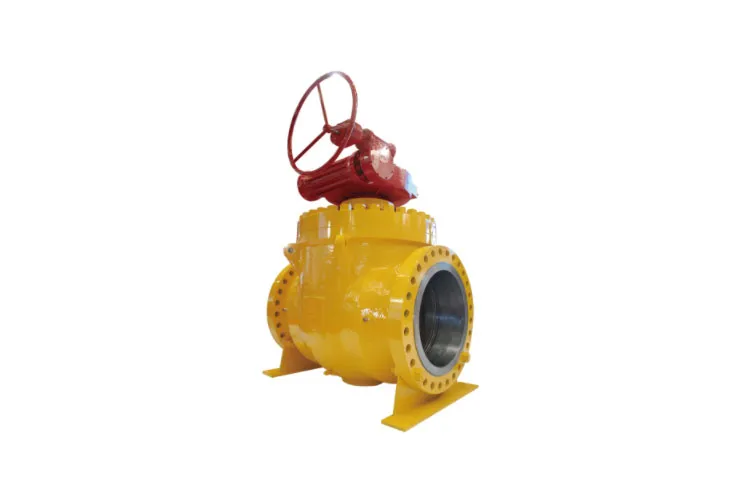
2.2 What Is a Trunnion Mounted Ball Valve?
A trunnion mounted ball valve is a design where the ball is mechanically held in position by:
- The upper valve stem (top trunnion)
- A lower shaft or post (bottom trunnion)
The ball is supported by bearings or bushings at the top and bottom. The valve seats are often spring‑loaded
or piston‑effect seats that move towards the ball to create sealing. The ball itself does not significantly
shift downstream under pressure.
2.3 Key Structural Difference
The fundamental structural difference between floating and trunnion mounted ball valves is the support of the
ball:
- Floating ball: ball “floats” between two seats and relies on line pressure to seal.
- Trunnion mounted ball: ball is fixed by trunnions; seats move to seal against the ball.
This difference directly affects torque behavior, seat contact area, sealing performance, and the range of
pressure and size where each type is most economical and reliable.
3. Fundamentals of Ball Valve Torque
Torque in ball valves is mainly driven by three groups of forces:
- Seat friction between ball and soft or metal seats
- Stem and packing friction in the stuffing box or packing chamber
- Hydrodynamic and pressure forces acting on the ball during opening and closing
Torque is not constant across the stroke. Minimum torque usually occurs near the fully open position, while
maximum torque is near the closed position or at the point when the ball passes through the high‑velocity
region (often around 10–20° from closed). For sizing actuators, valve torque values are normally provided by
the manufacturer according to defined conditions (clean water, specific differential pressure, lubrication
factor, safety factor, etc.).
4. How Design Affects Torque: Trunnion vs Floating
4.1 Torque Behavior in Floating Ball Valves
In floating ball valves:
- The ball is pressed into the downstream seat by differential pressure.
- Higher line pressure increases the contact pressure between ball and seat.
- Increased contact pressure leads to higher friction and higher operational torque.
As a result, floating ball valves tend to exhibit:
- Torque that rises significantly with pressure and valve size.
- Greater sensitivity to seat material, surface finish, and lubrication.
- Higher torque in high‑differential pressure (ΔP) and high‑pressure classes.
4.2 Torque Behavior in Trunnion Mounted Ball Valves
In trunnion mounted ball valves:
- The ball is supported by trunnions, reducing contact load between ball and seats.
- Pressure energizes the seats (via springs or differential area design) to seal against the fixed ball.
- The ball does not move significantly under pressure; seat load is more stable and controlled.
This leads to:
- Lower operating torque for the same size and pressure rating compared with floating design.
- More predictable torque behavior across the pressure range.
- Better suitability for large diameters and high‑pressure applications that require actuation.
4.3 Summary of Torque Characteristics
Parameter |
Floating Ball Valve |
Trunnion Mounted Ball Valve |
Ball support |
Supported by seats and stem, free to move slightly |
Rigidly supported by top and bottom trunnions |
Seat loading mechanism |
Line pressure pushes ball against downstream seat |
Springs or pressure push seats towards fixed ball |
Torque vs pressure |
Torque increases sharply with pressure |
Torque more stable, moderate increase with pressure |
Typical size range |
Up to about 6"–8" (varies by manufacturer) |
Economic from about 6" and above |
High ΔP service |
Higher torque, potential seat wear |
Lower torque, better for frequent operation |
Actuator sizing impact |
Larger actuators for same size/pressure |
Smaller actuators for same size/pressure |
Typical usage |
General service, low/medium pressure |
Pipelines, high pressure, large sizes |
5. Typical Torque Range Comparison
Actual torque values depend on manufacturer design, seat material, coatings (e.g., PTFE, PFA, hard chrome,
ENP), pressure class, media type, and differential pressure. However, the trend in torque comparison between
trunnion mounted ball valves and floating ball valves is consistent.
The following indicative table illustrates the typical relationship of operating torque for a
clean fluid such as water at ambient temperature, based on commonly available industrial data. Values are
conceptual and for comparison only; they are not to be used for detailed actuator sizing.
Indicative Torque Trend: Trunnion Mounted Ball Valve vs Floating Ball Valve
Valve Size (DN / NPS) |
Pressure Class |
Type |
Relative Torque Level |
Typical Application Note |
DN 25 (1") |
Class 150 |
Floating |
Very Low |
Manual lever, minimal torque difference; floating most common |
DN 50 (2") |
Class 300 |
Floating |
Low to Medium |
Torque starts to rise in higher classes; still suitable for floating design |
DN 100 (4") |
Class 300 |
Floating |
Medium to High |
Torque may justify actuation; trunnion option evaluated for frequent operation |
DN 100 (4") |
Class 300 |
Trunnion |
Medium |
Reduced torque vs floating; better for automated service |
DN 200 (8") |
Class 300 |
Floating |
High |
Large actuator required; floating torque may become uneconomical |
DN 200 (8") |
Class 300 |
Trunnion |
Medium |
More stable torque; typical choice for automated pipeline valves |
DN 300 (12") |
Class 600 |
Floating |
Very High |
Floating design usually avoided; torque and seat load excessive |
DN 300 (12") |
Class 600 |
Trunnion |
High |
Preferred solution; allows manageable actuator size |
Relative torque level is qualitative: Very Low, Low, Medium, High, Very High.
In many real projects, for the same size and pressure rating, a trunnion mounted ball valve can reduce
required operating torque by a substantial margin compared with a floating ball valve. This torque reduction
leads to:
- Smaller, lighter actuators
- Lower air or power consumption
- Reduced capital expenditure (CAPEX)
- Improved operational safety and maintainability
6. Detailed Design Features Influencing Torque
6.1 Seat Design
Seat design plays a crucial role in torque performance in both trunnion mounted and floating ball valves:
- Soft‑seated (PTFE, RTFE, PEEK, etc.): generally lower friction and lower torque.
- Metal‑seated: higher friction, higher torque, but suitable for high temperature,
abrasive media, and severe service.
- Spring‑loaded seats in trunnion valves: maintain consistent seat load over pressure
range, stabilizing torque.
6.2 Ball Surface and Coatings
The ball surface roughness and coating type directly affect friction and thus torque:
- Polished surfaces reduce friction and wear.
- Coatings such as ENP (electroless nickel plating) or hard chrome can improve hardness and reduce
galling.
- Special low‑friction coatings on the ball or seat can significantly reduce torque in both designs.
6.3 Stem and Packing
Stem friction is a component of total torque that is sometimes underestimated:
- High‑performance packing systems (e.g., graphite, PTFE, combined sets) affect torque.
- Packing adjustment (over‑tightening) can increase stem friction and torque.
- In trunnion valves, bearing systems at trunnions reduce torque due to better support and load
distribution.
6.4 Cavity Pressure and Double Block & Bleed
Some trunnion mounted ball valves are designed for double block and bleed (DBB) or
double isolation and bleed (DIB). These designs include various seat configurations:
- Self‑relieving seats to prevent over‑pressurization of body cavity.
- Upstream and downstream sealing to ensure shutoff on both sides.
These features can slightly modify torque values, but the overall trend of lower torque compared to floating
valves remains valid.
7. Advantages of Floating Ball Valves vs Trunnion Mounted Ball Valves
7.1 Advantages of Floating Ball Valves
- Simple construction: fewer parts and easier manufacturing.
- Lower cost in small sizes: especially economical in 1/2" to 4" range low
pressure.
- Good sealing at low pressure: line pressure pushes ball into downstream seat for tight
shutoff.
- Compact and lightweight: suitable for tight spaces and small skids.
- Widely available: standard option in many industrial catalogs.
7.2 Advantages of Trunnion Mounted Ball Valves
- Lower and more stable torque: especially beneficial for large diameters and high
pressure.
- Suitable for large sizes: generally preferred above 6" or in high‑pressure classes.
- Better performance in high ΔP and abrasive service: controlled seat loading, reduced
seat damage.
- Optimized for actuation: smaller actuators, lower operating cost.
- Enhanced sealing options: DBB, DIB, emergency seat injection, and advanced seat
designs.
- Lower stem and seat wear: due to balanced forces and use of trunnion bearings.
8. Application Comparison: Where Each Design Fits Best
Selecting between a trunnion mounted ball valve and a floating ball valve
requires consideration of torque, pressure, size, medium, operation frequency, and safety requirements. The
table below summarizes typical application preferences common in the valve industry.
Application Factor |
Preferred: Floating Ball Valve |
Preferred: Trunnion Mounted Ball Valve |
Valve size |
Small sizes (typically up to 4"–6") |
Medium to large sizes (6" and above) |
Pressure rating |
Class 150 and 300 (general service) |
Class 300 and above, especially 600, 900, 1500 |
Operating torque |
Low torque needs, infrequent operation, manual |
Critical torque control, frequent operation, automation |
Media |
Clean liquids and gases, non‑abrasive |
High‑pressure gas, crude oil, slurry, or abrasive service (with suitable seats) |
Pipeline service |
Secondary lines, utility service |
Transmission pipelines, trunk lines, block valves |
Isolation function |
Standard on/off isolation |
Critical isolation, DBB or DIB requirements |
Actuation |
Manual levers/gearboxes, small electric actuators |
Pneumatic, hydraulic, ESD valves, remote operation |
Cost consideration |
Lower initial valve cost for small sizes |
Lower overall system cost when actuator size is considered |
9. Common Specifications and Standards
Both trunnion mounted ball valves and floating ball valves are designed, manufactured, and tested according
to widely recognized international standards. These standards provide guidance that indirectly influences
torque by dictating allowable leakage, pressure ratings, and design safety factors.
9.1 Design and Manufacture
- API 6D – Specification for pipeline and piping valves (commonly applied to trunnion
mounted ball valves).
- API 608 – Metal ball valves, flanged, threaded, and welding ends (commonly for floating
ball valves).
- ASME B16.34 – Valves flanged, threaded and welding end (pressure‑temperature ratings and
design rules).
- ISO 17292 – Metal‑ball valves for petroleum, petrochemical, and associated industries.
9.2 Flange and End Connections
- ASME B16.5 – Pipe flanges and flanged fittings.
- ASME B16.47 – Large diameter steel flanges (often for large trunnion ball valves).
- ISO 7005 – International flange standards.
- Butt‑weld ends according to ASME B16.25.
9.3 Testing and Inspection
- API 6D and API 598 – Valve inspection and test requirements.
- ISO 5208 – Industrial valves pressure testing.
- Leakage classes as per ISO or API standards (e.g., zero leakage or bubble‑tight).
9.4 Mounting Interface for Actuation
- ISO 5211 – Industrial valves – Part‑turn actuators – Interface.
ISO 5211 defines the mounting pad dimensions and stem interface that allow actuators to be easily installed
and removed. Both trunnion mounted and floating ball valves use ISO 5211 interfaces, but torque values
determine which actuator size (and ISO 5211 pattern) is selected.
10. Valve Selection and Torque Considerations
10.1 Key Steps in Selecting Between Trunnion and Floating
When deciding between a trunnion mounted ball valve and a floating ball valve, engineers typically follow
these steps:
- Define pressure rating, temperature, medium, and size.
- Identify operation type: manual, on‑off actuation, modulating, emergency shutdown.
- Estimate differential pressure in closed and opening/closing positions.
- Request manufacturer torque data for both designs where applicable.
- Compare total system cost: valve + actuator + control accessories.
- Consider safety, maintenance, and lifecycle requirements.
10.2 Torque Safety Factors
For actuator sizing, it is standard practice to apply safety factors on top of the
manufacturer’s basic torque:
- Typical safety factor: 1.2 to 1.5 times the maximum expected valve torque.
- Higher safety factors may be used for sticky services, solids, waxy crude, or infrequent operation.
Due to lower and more predictable torque, trunnion mounted ball valves often allow lower safety margins
without compromising reliability, whereas floating ball valves in severe service may require higher margins.
10.3 Torque and Seat Wear
Excessive torque can lead to accelerated seat wear, deformation, or even damage to the ball and stem. In
floating ball valves, high pressure forces the ball strongly into the downstream seat, increasing seat stress.
In trunnion mounted valves, seat contact pressure is more controlled, reducing wear and prolonging service
life. This difference is important in:
- High operating cycles (frequent open/close)
- Automated systems where valves operate many times per day
- Severe service valves with high differential pressure or abrasive media
11. Typical Use Cases and Torque‑Driven Design Choices
11.1 Pipeline Block Valves
Oil and gas transmission pipelines often use large‑diameter, high‑pressure ball valves at block valve
stations. These valves are almost always trunnion mounted because:
- Valve diameters may reach up to 48" or more.
- Line pressures are high (Class 600, 900, 1500 or equivalent PN values).
- Actuation is required for remote operation and safety shutdown.
- Torque must remain manageable to limit actuator size and power consumption.
11.2 Process Skids and Utility Lines
Small‑bore process lines, utility connections, and general services often prefer floating ball valves because:
- Valve sizes are typically below 4".
- Pressures are lower, resulting in modest torque even for floating design.
- Manual operation is common with simple levers or gearboxes.
- Initial valve cost is a major factor, and floating valves are more economical.
11.3 High‑Cycle Automated Service
In high‑cycle automated on/off or control applications, torque stability is essential:
- Trunnion mounted ball valves provide more consistent torque over the lifecycle.
- Wear‑resistant seat and ball coatings further extend the life.
- Lower torque reduces stress on actuator mechanisms and control systems.
12. Frequently Asked Questions: Trunnion Mounted vs Floating Ball Valve Torque
12.1 Is a Trunnion Mounted Ball Valve Always Better Than a Floating Ball Valve?
No single design is universally better. For small sizes and low pressure, a floating ball valve can be more
economical and entirely adequate. When torque, size, and pressure begin to increase, the trunnion mounted
ball valve design becomes more attractive because of its lower torque and better suitability for actuation.
12.2 At What Size Should I Consider Changing from Floating to Trunnion Design?
Many industry users consider trunnion mounted ball valves starting at around 4" to 6", especially
in higher pressure classes or when frequent operation or actuation is required. The exact crossover point
depends on pressure, medium, and project economics.
12.3 Why Do Trunnion Mounted Ball Valves Have Lower Torque?
The ball in a trunnion mounted valve is supported by trunnions at top and bottom, so line pressure does not
push the ball hard into the seat like in a floating ball design. Instead, seats move towards the ball with
controlled spring or pressure energization, leading to lower and more stable friction forces and therefore
lower torque.
12.4 How Does Media Type Influence Torque?
Clean, non‑lubricating fluids such as water typically produce moderate torque. Lubricating fluids such as
certain oils may reduce friction. Dirty, viscous, or solid‑containing media can increase friction and torque,
particularly in floating ball valves where debris can accumulate at the seat interface. Trunnion designs with
self‑relieving or scraper seats are often preferred for such conditions.
12.5 Do Metal Seated Ball Valves Have Higher Torque?
Metal seated ball valves generally exhibit higher torque than soft‑seated designs due to increased friction
between metal surfaces. This effect applies to both trunnion mounted and floating designs. However, the
trunnion configuration still tends to maintain comparatively lower torque than a floating metal seated valve
of equal size and pressure rating.
13. Summary: Trunnion Mounted Ball Valve vs Floating Ball Valve Torque Comparison
The comparison of trunnion mounted ball valve vs floating ball valve torque reveals clear
patterns:
- Floating ball valves are simple, cost‑effective, and suitable for small sizes and lower pressures where
torque remains modest.
- Trunnion mounted ball valves provide significantly lower and more predictable torque, making them the
preferred choice for large sizes, higher pressure classes, and automated pipeline and process
applications.
- Torque behavior is a direct consequence of ball support method and seat loading mechanism in both
designs.
- When lifecycle cost, actuator size, and operational reliability are considered, trunnion mounted ball
valves often deliver better overall value in demanding services.
For engineers and specifiers, understanding how each design affects torque is essential for safe, economical,
and reliable valve and actuator selection. Always consult detailed manufacturer torque data and consider
media, temperature, differential pressure, actuation method, and required safety margins when selecting
between a trunnion mounted ball valve and a floating ball valve.
“`






 Phone