


Trunnion mounted ball valves are among the most widely used shut-off valves in medium and large diameter pipeline projects.
They provide reliable isolation, low operating torque, and high sealing performance under a wide range of pressures and temperatures.
This guide explains the key principles behind trunnion mounted ball valve selection for pipeline projects, with an emphasis on
engineering requirements, industry standards, materials, and specification parameters relevant to oil and gas, petrochemical,
refined products, water transmission, and other critical pipeline systems.
The focus is on neutral, industry-wide information only. No specific brands or manufacturers are recommended.
Engineers, project managers, procurement teams, and technical buyers can use this content to build trunnion mounted ball valve
specifications, RFQs, and design standards for new pipeline projects or pipeline upgrades.
A trunnion mounted ball valve is a quarter-turn valve where the ball is supported by trunnions (shafts) at the top and bottom.
Unlike a Floating ball valve, where the ball is held in place only by the seats and pressure, a trunnion ball is mechanically
anchored and restrained. This design reduces operating torque, improves seat performance, and allows stable sealing at higher
pressures and larger diameters.
In floating ball valves, the ball is pressed against the downstream seat by the line pressure. This creates tight sealing but can lead
to high operating torque and seat wear in large sizes or high-pressure pipelines. In trunnion mounted ball valves, the ball is fixed
in position by the trunnions. The seats are spring-loaded or pressure-energized to move toward the ball, distributing loads more
evenly and minimizing torque.
| Feature | Trunnion Mounted Ball Valve | Floating Ball Valve |
|---|---|---|
| Ball Support | Supported at top and bottom by trunnions | Held between seats; free to move slightly downstream |
| Typical Size Range | Medium to large diameters (e.g., 2" and above) | Small to medium diameters (commonly up to 8"–10") |
| Operating Torque | Lower, suitable for large sizes and high pressure | Higher torque at large diameters or high pressure |
| Seat Loading | Spring/pressure-energized seats; more controlled load | Seat load proportional to line pressure and ball movement |
| Typical Applications | High-pressure pipelines, trunk lines, export lines, block valves | General service, low to medium pressure, compact systems |
| Cost | Higher initial cost, more complex structure | Lower cost, simpler design |
Pipeline projects, especially long-distance transmission and high-pressure systems, demand robust isolation valves that can
operate reliably over decades. Trunnion mounted ball valves offer several advantages that make them the default choice for mainline
block valves and critical applications.
Understanding the primary design options for trunnion mounted ball valves is necessary to make informed selection decisions for
pipeline projects. Different design choices affect performance, cost, maintainability, and risk profile.
| Body Type | Description | Advantages | Typical Pipeline Uses |
|---|---|---|---|
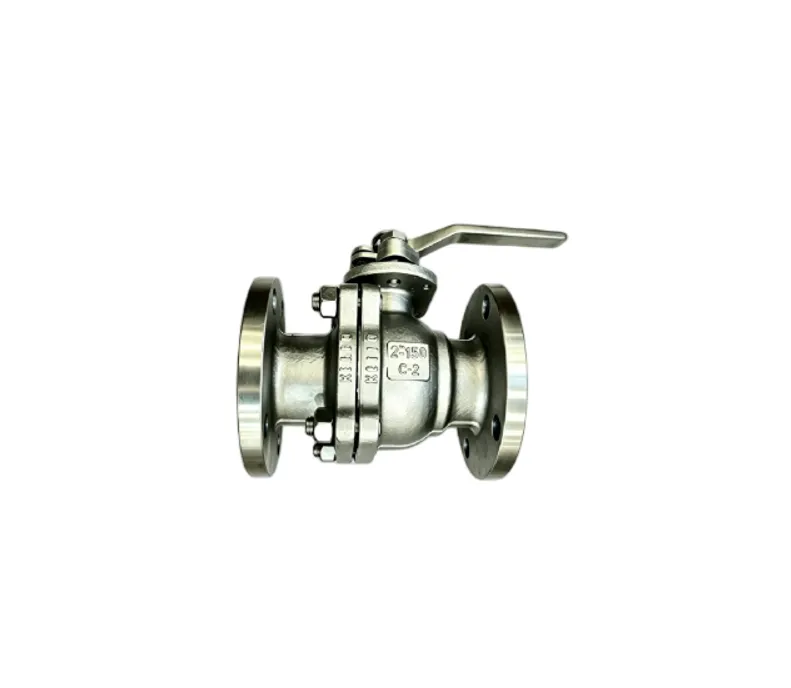
| Two-Piece Body | Valve body consists of two main pieces bolted together. | Compact, relatively economical, easier assembly. | General pipeline block valves, smaller diameters, non-pigging lines. |
| Three-Piece Body | Body made of three segments; center section can be removed. | Good maintainability, seat and ball replacement may be easier without removing from line. | Process plants, smaller pipeline segments, where in-line maintenance is more critical. |
| Fully Welded Body | Body fully welded, often with minimal bolted joints. | High integrity, low leak risk, suitable for buried installation and long-term service. | Cross-country pipelines, buried lines, high-reliability critical block valves. |
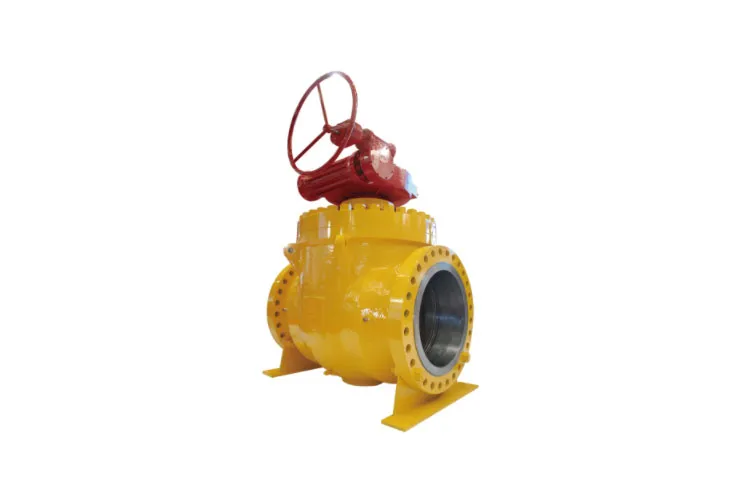
| Top-Entry Body | Internal parts removable via bonnet from top while valve remains in pipeline. | Allows maintenance from above, convenient for large line sizes or limited access. | Offshore, buried valves with vault access, critical block valves where in-line repairs are required. |
In major transmission pipelines where pipeline pigging is required, full bore trunnion mounted ball valves are generally
specified for line block valves, station isolation valves, and trap isolation valves.
| Seat Type | Materials | Characteristics | Typical Pipeline Service |
|---|---|---|---|
| Soft-Seated | PTFE, RPTFE, PEEK, Nylon, elastomers | Excellent bubble-tight sealing, lower torque, limited temperature and chemical resistance depending on material. | General oil and gas service, clean fluids, moderate temperature and non-abrasive media. |
| Metal-Seated | Hard-faced stainless steel, Stellite, tungsten carbide overlays | Higher temperature capability, abrasion and erosion resistance, suitable for dirty, particulate-laden or corrosive services. Often class V/VI leakage or specified leakage class. | Slurry pipelines, high-temperature gas, severe service, erosive crude lines, CO2 with impurities. |
| Composite Seats | Soft insert with metal backup | Combined benefits of soft and metal seating, fire-safe capability, improved durability. | Critical isolation with fire-safe requirements, high-value hydrocarbon pipelines. |
In pipeline ball valve selection, the terms Double Block and Bleed (DBB) and Double Isolation and Bleed (DIB) are crucial.
They define how the valve seals against pressure from one or both sides.
| Term | Definition (Conceptual) | Seat Function | Typical Pipeline Use |
|---|---|---|---|
| DBB (Double Block and Bleed) | Valve capable of providing pressure sealing against pressure from one side only, with a bleed between seats. | Usually one seat upstream, one downstream; both capable of sealing in closed position with pressure on one side. | General pipeline isolation where pressure is expected mainly from one direction. |
| DIB (Double Isolation and Bleed) | Valve capable of providing sealing against pressure from both sides simultaneously in closed position, with a bleed in between. | Both seats designed to seal in both directions; more stringent isolation. | Critical applications requiring high-integrity isolation, custody transfer, hazardous fluids. |
Careful review of project specifications and applicable valve design standards is important to correctly define DBB or DIB
requirements for trunnion mounted ball valves in pipeline projects.
Pipeline trunnion mounted ball valves must comply with recognized international standards to ensure safety, interoperability, and
regulatory acceptance. Several standards define requirements for design, testing, materials, and performance.
| Standard | Scope | Relevance to Pipeline Trunnion Ball Valves |
|---|---|---|
| API 6D / ISO 14313 | Pipeline valves for petroleum and natural gas industries. | Primary standard for trunnion mounted ball valves used as pipeline block valves, including design, testing, and documentation requirements. |
| ASME B16.34 | Valves – Flanged, Threaded, and Welding End. | Defines pressure-temperature ratings, dimensions, and materials. Often referenced for trunnion ball valve pressure classes. |
| API 607 / ISO 10497 | Fire test for quarter-turn valves. | Used to verify fire-safe performance of soft-seated trunnion mounted ball valves in hydrocarbon service. |
| API 598 | Valve inspection and testing. | General valve test requirements, sometimes referenced in conjunction with API 6D for supplementary tests. |
| ISO 5211 | Actuator mounting flanges. | Ensures compatibility between trunnion ball valves and actuators (pneumatic, electric, hydraulic). |
| ASME B31.4 / B31.8 | Pipeline codes for liquid and gas transportation. | Define system-level requirements for pipelines where trunnion ball valves are installed, including design pressure and safety factors. |
Trunnion mounted ball valves for pipeline projects are typically specified according to ASME or equivalent pressure classes
(forged or cast steel valves), such as Class 150, 300, 600, 900, 1500, and 2500. The allowable working pressure decreases as
temperature rises according to ASME B16.34 tables.
| ASME Class | Typical Pipeline Use | Usual Size Range (in Pipeline Service) |
|---|---|---|
| Class 150 | Low-pressure pipelines, water distribution, low-pressure crude and product lines. | Commonly up to 48" or larger. |
| Class 300 | Moderate-pressure oil and gas pipelines, terminals, loading facilities. | Typically up to 42" or larger. |
| Class 600 | Higher-pressure transmission pipelines for oil and gas. | Frequently used up to 36" or more depending on design. |
| Class 900 / 1500 | High-pressure gas transmission, compressor discharge lines, offshore export lines. | Often used up to 24"–36" depending on project requirements. |
| Class 2500 | Very high-pressure specialized service, high-pressure gas or injection systems. | Usually limited to smaller sizes due to extreme wall thickness. |
Choosing appropriate materials is a fundamental step in trunnion mounted ball valve selection for pipeline projects.
Material compatibility with the transported fluid, operating pressure, temperature, and external environment (buried, marine, arctic,
desert) is critical for safety and long-term performance.
| Material | Type | Characteristics | Typical Pipeline Application |
|---|---|---|---|
| Carbon Steel (e.g., ASTM A216 WCB, ASTM A105) | Cast or forged | Cost-effective, suitable for many oil, gas, and water services at moderate temperatures. | Onshore oil and gas pipelines, refined products, water transport. |
| Low-Temperature Carbon Steel (e.g., ASTM A352 LCB/LCC) | Cast | Enhanced impact toughness at low temperatures. | Arctic or sub-zero environment pipelines, cryogenic feed lines. |
| Alloy Steel (e.g., ASTM A182 F22) | Forged alloy steel | Better high-temperature strength and creep resistance. | High-temperature pipelines, steam-related systems around process plants. |
| Stainless Steel (e.g., ASTM A351 CF8M / ASTM A182 F316) | Cast or forged austenitic stainless steel | Good corrosion resistance, suitable for many chemicals and CO2 service. | Corrosive fluids, CO2 pipelines, offshore, marine environments. |
| Duplex / Super Duplex Stainless Steel | Duplex alloy | Higher strength, excellent resistance to chloride stress corrosion cracking and pitting. | Offshore pipelines, seawater service, high chloride and sour hydrocarbon streams. |
The ball and stem in trunnion mounted ball valves must resist wear, galling, and corrosion. Common choices include:
| Component | Common Materials | Selection Considerations |
|---|---|---|
| Soft Seats | PTFE, RPTFE, PEEK, Nylon, Devlon | Based on temperature rating, chemical compatibility, pressure, and wear. |
| Metal Seats | Stainless steel with hard-facing alloys | Needed for high-temperature or abrasive pipelines, or where fire-safe performance is critical. |
| Stem Packing | PTFE, graphite, braided packing systems | Leakage class, temperature rating, fugitive emission standards. |
| Body Gaskets | Spiral wound gaskets, graphite, metal gaskets | Fire-safe requirements, temperature limits, pressure rating. |
| O-Rings / Elastomer Seals | NBR, HNBR, FKM (Viton), EPDM | Compatibility with hydrocarbons, sour service (H2S), CO2, and temperature exposure. |
When specifying trunnion mounted ball valves for a pipeline project, engineers must define several technical parameters.
These parameters influence the valve design, materials, and features, and they form the basis for datasheets and procurement documents.
The interface between the trunnion mounted ball valve and the pipeline must be carefully specified:
The following is an example of a generic specification table that can be adapted for pipeline projects. It summarizes common
selection parameters for a trunnion mounted ball valve serving as a mainline block valve.
| Item | Parameter | Typical Specification (Example) |
|---|---|---|
| 1 | Valve Type | Trunnion mounted ball valve, full bore, on/off service. |
| 2 | Design Standard | API 6D / ISO 14313, ASME B16.34. |
| 3 | Size (NPS / DN) | NPS 24 (DN 600) or as required by pipeline diameter. |
| 4 | Pressure Class | ASME Class 600 (or project-specific class). |
| 5 | Body Construction | Fully welded body for buried service, or two-piece/three-piece for above-ground use. |
| 6 | Port Type | Full bore for piggable pipelines. |
| 7 | End Connections | Butt-weld ends to match pipeline wall thickness and material. |
| 8 | Body Material | Carbon steel (e.g., ASTM A105 / A216 WCB) or as per material selection for fluid and environment. |
| 9 | Ball and Stem Material | Stainless steel or alloy steel with corrosion-resistant cladding/hard-facing. |
| 10 | Seat Type | Soft seats (PTFE / RPTFE / PEEK) or metal seats for severe service. |
| 11 | Sealing Type | Double block and bleed (DBB) or double isolation and bleed (DIB) as per project requirement. |
| 12 | Fire-Safe Design | Fire-safe tested and certified in accordance with API 607 or equivalent. |
| 13 | Operation | Gear-operated or actuated (pneumatic, electric, hydraulic). |
| 14 | Actuator Mounting | ISO 5211 mounting pad or equivalent. |
| 15 | Leakage Rate | Bubble-tight shut-off or specified leakage class as per project standard. |
| 16 | Testing | Shell, seat, and functional tests in accordance with API 6D and project specifications. |
| 17 | Coating | External coating suitable for buried or marine environment (e.g., FBE or equivalent). |
| 18 | Documentation | Test certificates, material certificates, operations and maintenance manuals. |
Different locations along a pipeline system have different functional and design requirements for trunnion mounted ball valves.
Understanding typical use cases assists in configuring valve specifications for each service location.
Even when the correct trunnion mounted ball valve is selected, poor installation or maintenance can compromise performance.
Pipeline projects should incorporate clear guidelines for handling, installation, testing, and long-term maintenance.
In some pipeline configurations, gate valves, plug valves, or other valve types can be considered. Choosing between trunnion mounted
ball valves and alternatives depends on project priorities, cost, and operational requirements.
| Valve Type | Advantages | Limitations | When Trunnion Ball Valves Are Preferred |
|---|---|---|---|
| Trunnion Mounted Ball Valve | Low torque, quick operation, tight shutoff, suitable for large sizes and high pressure. | Higher initial cost, more complex internal components. | General choice for critical block valves, piggable lines, and automated isolation. |
| Gate Valve | Good for bi-directional flow, low pressure drop, simple design. | Slower operation, potential for seat leakage, less suitable for frequent cycling. | When fast quarter-turn action and compact actuators are required, ball valves are favored. |
| Plug Valve | Robust, suitable for dirty service, can be DBB configured. | Higher torque, potential lubrication requirements. | Where low-torque, high-sealing performance and fire-safe soft seating are needed, trunnion ball valves are often selected. |
The following checklist summarizes critical steps for trunnion mounted ball valve selection in pipeline projects. It can help
ensure that main aspects are considered during design and procurement.
| Step | Selection Item | Key Points to Confirm |
|---|---|---|
| 1 | Define Service Conditions | Fluid type, pressure, temperature, presence of solids, corrosive components. |
| 2 | Set Design Standards | Applicable codes (API 6D, ASME B31.x, fire-safe, emissions), corporate standards. |
| 3 | Select Pressure Class and Size | Match line size, confirm design pressure, consider future expansion or uprating. |
| 4 | Choose Body Construction | Fully welded, two-/three-piece, or top-entry based on maintenance and installation constraints. |
| 5 | Decide on Port Type | Full bore for piggable lines; reduced bore only where acceptable. |
| 6 | Material Selection | Body, ball, stem, seats, seals based on fluid and environment (sour, CO2, offshore, arctic). |
| 7 | Sealing Configuration | DBB or DIB, leakage class, fire-safe requirement. |
| 8 | End Connections | Flanged, butt-weld, hub-end consistency with pipeline design. |
| 9 | Actuation and Controls | Type of actuator, fail position, power source, control signals, ESD integration. |
| 10 | Inspection and Testing | Test scope (hydrostatic, pneumatic, fire test, NDE) and documentation requirements. |
| 11 | Coating and Protection | External coating, cathodic protection, stem extensions, insulation needs. |
| 12 | Lifecycle Considerations | Expected service life, maintenance access, spare parts strategy. |
This article provides general engineering and selection guidance for trunnion mounted ball valves in pipeline projects.
Final valve specification should always be based on detailed project requirements, local regulations, applicable design codes,
and risk assessments carried out by qualified engineers.
Trunnion mounted ball valves are a core component of modern pipeline projects across the oil and gas, petrochemical, water, and
energy sectors. Their combination of low operating torque, high-pressure capability, and reliable sealing performance makes them
the default choice for mainline block valves, launcher and receiver stations, and critical isolation points.
Effective trunnion mounted ball valve selection requires a structured approach that considers operating conditions, material
compatibility, body construction, seat design, sealing configuration (DBB or DIB), standards compliance, actuation, and pipeline
integration. By using the concepts, tables, and checklists outlined in this guide, pipeline project teams can develop robust
and consistent specifications that enhance safety, reliability, and long-term performance of pipeline infrastructure.
“`
الشخص المسؤول: ماكس سونغ (سونغ شانشان)
المنصب: المدير العام
الجوال: +86 15611322632
الهاتف: +86 10 89282693
البريد الإلكتروني: international@bvmc.com
العنوان: رقم 3، طريق لوهي، بلدة بانغتشوانغ، حي داكسينغ، بكين


حقوق الطبع والنشر © شركة مصنع بكين للصمامات المحدودة
خريطة الموقعيستخدم هذا الموقع ملفات تعريف الارتباط لضمان حصولك على أفضل تجربة على موقعنا.




 Phone