


صمام الكرة
Ball Valve: A Comprehensive Overview A ball valve is a quarter-turn valve that uses a hollow, perforated, and pivoting ball to control the flow of fluids or gases through a pipeline. When the valve is open, the hole in the ball aligns with the flow direction, allowing media to pass through. When closed, the ball rotates 90 degrees, blocking the flow completely. Ball valves are widely used in industrial, commercial, and residential applications due to their reliability, durability, and efficient sealing capabilities. Design and Components The primary components of a ball valve include: 1. Body – The outer casing, typically made from materials like stainless steel, brass, or PVC, depending on the application. 2. Ball – A spherical disc with a hole (bore) that controls flow. It can be full-port (same diameter as the pipe) or reduced-port (smaller than the pipe). 3. Seats – Rings that create a tight seal between the ball and the body, usually made from PTFE (Teflon) or other resilient materials. 4. Stem – A shaft connecting the ball to the actuator (handle or motor) to rotate the ball. 5. Actuator – A lever, gear, or automated system (electric/pneumatic) used to operate the valve. Types of Ball Valves 1. Floating Ball Valve – The ball is held in place by compression from the seats, allowing slight movement for better sealing. 2. Trunnion Ball Valve – The ball is fixed on a trunnion (pivot), reducing operating torque and making it suitable for high-pressure applications. 3. Multi-Port Ball Valve – Features multiple flow paths, enabling flow diversion or mixing. 4. V-Port Ball Valve – The ball has a V-shaped bore for precise flow control, often used in throttling applications. Advantages - Quick Operation – A 90-degree turn fully opens or closes the valve. - Excellent Sealing – Provides bubble-tight shutoff, minimizing leakage. - Low Maintenance – Simple design with fewer moving parts reduces wear. - Versatility – Works with liquids, gases, and slurries in various industries (oil & gas, water treatment, chemical processing). Applications Ball valves are used in: - Oil & Gas – Pipeline shutoff and control. - Water Systems – Residential plumbing and municipal water distribution. - HVAC – Refrigerant and heating system control. - Chemical Processing – Handling corrosive or high-purity fluids. Selection Considerations When choosing a ball valve, factors include: - Material compatibility with the media. - Pressure and temperature ratings. - Port size (full or reduced bore). - Actuation method (manual or automated). Conclusion Ball valves are essential for fluid control due to their efficiency, durability, and adaptability. Their simple yet robust design makes them a preferred choice across industries, ensuring reliable performance in demanding environments.
نتاج
تصنيف:
صمام الكرة
-
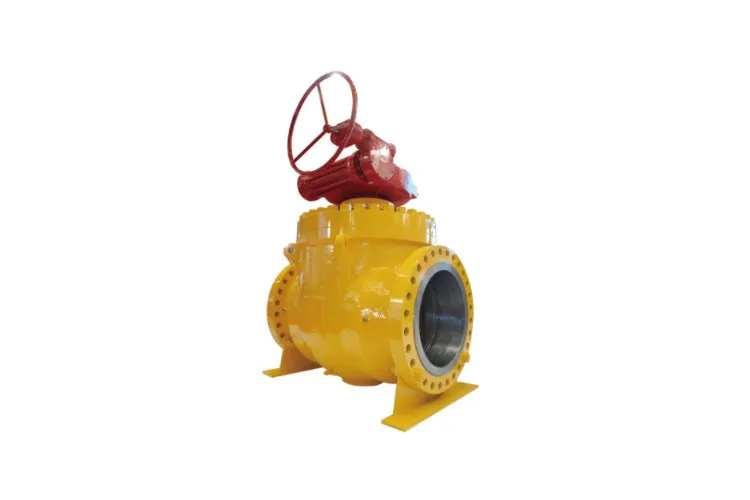
صمام الكرة للتحكم في التدفق العلوي الصناعي
Category: صمام الكرةBrowse number:Number:Release time: 2026-10-18 20:02:59تم تصميم الصمام الكروي الصناعي العلوي للتحكم في تدفق خطوط الأنابيب من أجل التشغيل الموثوق به في البيئات الصناعية الصعبة. يتميز بتصميم المدخل العلوي، فهو يسمح بسهولة الصيانة والفحص دون إزالة الصمام من خط الأنابيب، مما يقلل من وقت التوقف عن العمل. تم تصنيع هذا الصمام من سبائك عالية الجودة مقاومة للتآكل، ويضمن أداءً طويل الأمد في التطبيقات الكيميائية ذات الضغط العالي ودرجة الحرارة العالية والتطبيقات الكيميائية العدوانية. يوفر الختم الدقيق للكرة والمقعد التحكم في التدفق بدون تسرب، بينما يتحمل الهيكل القوي الضغط الميكانيكي والوسائط الكاشطة. يعتبر هذا الصمام الكروي العلوي مثاليًا للصناعات الكيميائية والبتروكيماوية والطاقة، ويوفر إدارة تدفق خطوط الأنابيب تتسم بالكفاءة والأمان والمتانة.
أخبار
تصنيف:
-
[أخبار الصناعة]Triple Offset Butterfly Valve for High Temperature Service
2026-02-28 05:55:05
حالة
تصنيف:
لا توجد نتائج بحث!
فيديو
تصنيف:
لا توجد نتائج بحث!
تحميل
تصنيف:
لا توجد نتائج بحث!
تجنيد
تصنيف:
لا توجد نتائج بحث!
المنتجات الموصى بها
لا توجد نتائج بحث!



 Phone
Phone