



Large bore butterfly valves are essential flow control devices used in water treatment, power generation, HVAC, mining, industrial processing, marine systems, and other high-demand pipelines. When pipeline diameters become larger, the performance requirements for valve materials and body construction become more critical. The right combination of butterfly valve body material, disc material, seat material, shaft design, and construction type directly affects sealing performance, corrosion resistance, service life, pressure handling, and maintenance cost.
This guide provides an SEO-friendly, industry-focused overview of large bore butterfly valve materials and body construction. It is written for engineers, procurement teams, technical buyers, distributors, and B2B website publishers who need clear, original, and structured content for blogs, category pages, and industrial product directories. The content focuses on general industry knowledge only and does not recommend any specific manufacturer.
Large Bore Butterfly Valve Materials and Body Construction
What Is a Large Bore Butterfly Valve?
A large bore butterfly valve is a quarter-turn valve designed for pipelines with large diameters, typically used to start, stop, regulate, or isolate flow. The term large bore generally refers to valves in medium-to-very large nominal sizes such as DN300, DN400, DN500, DN600, DN800, DN1000, DN1200, and beyond. In many industrial systems, large bore butterfly valves are chosen because they offer a compact face-to-face dimension, relatively low weight compared with gate valves, and efficient flow control in large pipelines.
The basic operating principle is simple: a circular disc rotates around a shaft inside the valve body. When the disc is parallel to the flow, the valve is open. When the disc turns perpendicular to the flow, the valve is closed. Despite this simple mechanism, the material selection and structural design become increasingly important as valve size increases.
In large diameter pipelines, valve failure can lead to costly downtime, leakage, pressure loss, contamination, or safety issues. Because the valve body in a large bore application must resist mechanical stress, fluid corrosion, wear, and sometimes external environmental exposure, material selection is not just a specification detail; it is a core performance factor.
Large bore butterfly valves are available in several body construction styles. Each one offers different installation advantages, pressure ratings, and performance characteristics. Understanding body construction helps buyers match the valve to the pipeline layout and service conditions.
A wafer type butterfly valve is installed between two pipeline flanges and is held in place by flange bolts. This design is compact, lightweight, and widely used in large bore applications where space and cost efficiency are important.
A lug type butterfly valve has threaded inserts or lugs around the body, allowing bolting to each flange independently. This construction is often selected where downstream pipe sections may need to be removed without affecting the entire line.
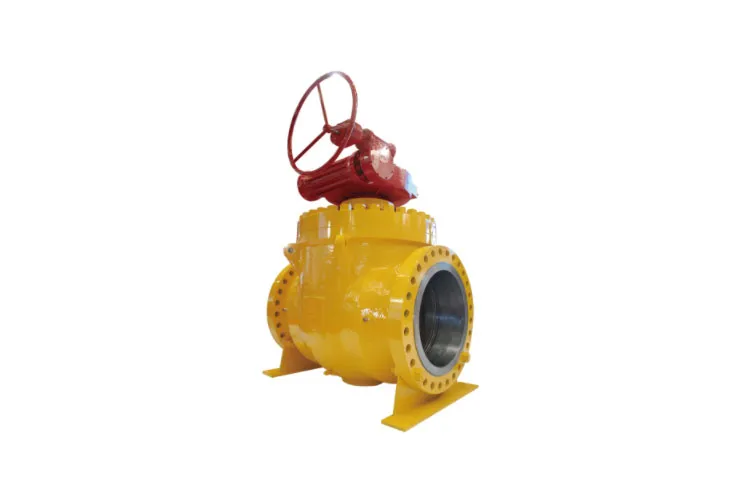
Double flanged butterfly valves have flanges integrated into both sides of the body. They are often used in larger sizes and heavier-duty systems where alignment, strength, and structural stability are required.
While standard large bore butterfly valves are widely used for general service, high-performance and triple offset versions are selected for more demanding conditions. Their body construction usually supports metal seating, tighter shutoff requirements, and better performance in high temperature or aggressive media.
The butterfly valve body material is one of the most important factors in selecting a valve. The body is the main pressure-retaining component, and it must be compatible with both the operating medium and the external installation environment. The most common body materials are ductile iron, cast iron, carbon steel, stainless steel, and special alloys.
| Body Material | Main Advantages | Typical Applications | Key Considerations |
|---|---|---|---|
| Ductile Iron | High strength, good toughness, cost-effective | Water, HVAC, general industrial service | Usually requires protective coating for corrosion resistance |
| Cast Iron | Economical, easy to produce, widely available | Low-pressure water and utility systems | Less impact-resistant than ductile iron |
| Carbon Steel | Strong, versatile, suitable for higher pressure | Oil, gas, steam, industrial pipelines | May require coating or lining for corrosion protection |
| Stainless Steel | Excellent corrosion resistance, durable, hygienic | Food, chemical, marine, corrosive environments | Higher cost than iron-based materials |
| Alloy Steel / Special Alloys | Enhanced resistance to heat, pressure, or chemicals | Severe service, specialty process lines | Selected based on media compatibility and operating conditions |
Ductile iron is one of the most popular body materials for large bore butterfly valves because it offers an excellent balance of strength, ductility, and cost. Compared with traditional cast iron, ductile iron has better impact resistance and mechanical performance, making it suitable for larger valves that experience load and vibration.
In many waterworks and HVAC systems, ductile iron is the preferred body material when a reliable, economical solution is needed. It is often paired with protective coatings such as epoxy to improve resistance to moisture and corrosion.
Cast iron remains a common material for lower-pressure and less aggressive service. It is generally more affordable than ductile iron and may be used in utility systems where operating conditions are moderate. However, because it is more brittle, cast iron is less suitable for highly stressed or impact-prone installations.
Carbon steel body construction is frequently used in industrial systems that require greater pressure resistance and mechanical strength. Large bore butterfly valves with carbon steel bodies are often found in steam systems, oil and gas applications, power generation, and process pipelines.
Carbon steel can be adapted with different coatings, linings, and surface treatments to improve corrosion resistance. This makes it a practical choice when a stronger body is required without moving to a more expensive stainless steel design.
Stainless steel butterfly valve bodies are selected for high corrosion resistance, cleanliness, and long-term durability. They are especially useful in seawater, chemical process, food processing, pharmaceutical, and washdown environments.
Although stainless steel is more expensive, it often offers lower life-cycle cost in demanding service due to reduced maintenance, better resistance to corrosion, and improved reliability.
In extreme service conditions, special alloys may be used for the butterfly valve body. These materials are chosen for specific chemical resistance, high-temperature stability, or severe corrosion environments. Examples can include duplex stainless steel, super duplex stainless steel, nickel alloys, and other engineered metal solutions.
The valve disc is the rotating component that controls flow. In large bore butterfly valves, the disc must resist hydraulic load, torque, erosion, and corrosion. Disc material selection strongly affects operating performance, sealing, and longevity.
| Disc Material | Performance Benefits | Common Uses |
|---|---|---|
| Ductile Iron Disc | Economical, reliable for standard service | Water and HVAC systems |
| Stainless Steel Disc | Corrosion resistant, durable, hygienic | Marine, chemical, food-grade service |
| Carbon Steel Disc | Strong, suitable for pressure service | Industrial and utility pipelines |
| Nickel Coated / Epoxy Coated Disc | Improved surface protection | Water treatment and general industrial lines |
| Special Alloy Disc | Excellent resistance to severe conditions | Highly corrosive or high-temperature environments |
Although the focus of this guide is on body construction and materials, the seat material is closely related to the overall valve performance. The seat forms the sealing interface between the body and disc and is critical to shutoff quality. In large bore butterfly valves, seat material selection impacts leakage performance, friction, and service life.
| Seat Material | Features | Typical Service |
|---|---|---|
| EPDM | Good water resistance, flexible, economical | Potable water, HVAC, wastewater |
| NBR / Buna-N | Good for oils and hydrocarbons | Oil, fuel, general industrial service |
| PTFE | Excellent chemical resistance, low friction | Chemical processing, corrosive fluids |
| Metal Seat | High-temperature capability, durable under severe conditions | Steam, hot gas, high-performance service |
The shaft or stem transmits torque from the actuator or handle to the disc. In large bore butterfly valves, shaft construction is especially important because larger discs generate higher operating loads. The shaft material must provide torsional strength, corrosion resistance, and fatigue resistance.
Common shaft materials include stainless steel, carbon steel with protective treatment, and specialty alloys for corrosive or high-temperature service. In many designs, the shaft is supported by bearings or bushings to reduce friction and help maintain smooth operation.
Even when the base body material offers adequate mechanical strength, surface protection often determines long-term durability. Coatings and linings are widely used in large bore butterfly valves to protect against corrosion, abrasion, and environmental damage.
| Protection Method | Main Benefit | Typical Application |
|---|---|---|
| Fusion Bonded Epoxy | Strong corrosion protection and smooth finish | Water and wastewater systems |
| Polyurethane Coating | Good abrasion resistance | Slurry and industrial handling |
| PTFE Lining | Excellent chemical resistance | Chemical processing |
| Rubber Lining | Protection against certain corrosive and abrasive media | Mining and slurry applications |
| Paint or Anti-Corrosion Primer | Basic external surface protection | General industrial environments |
Large bore butterfly valves are used across a wide range of sizes and pressure classes. The larger the diameter, the more important structural design becomes. As size increases, the disc becomes heavier, torque requirements rise, and body deflection must be controlled carefully.
| Nominal Size Range | Typical Use | Construction Focus |
|---|---|---|
| DN300 to DN500 | Water, HVAC, utility systems | Compact body, cost efficiency |
| DN600 to DN1000 | Industrial process, water transmission | Higher body strength, stable sealing |
| DN1200 to DN2000 | Large municipal and infrastructure systems | Structural rigidity, torque management |
| DN2000 and above | Major water conveyance, power, and infrastructure projects | Reinforced construction, engineering customization |
Choosing the right material and body construction for a large bore butterfly valve brings significant operational benefits. In many applications, the selection process should consider not only the initial purchase price but also maintenance, service life, energy efficiency, and process reliability.
Selecting the correct butterfly valve body material depends on multiple operating factors. There is no single universal choice for every application. Instead, buyers should evaluate the fluid characteristics, temperature, pressure, installation environment, and required lifecycle performance.
Different industries have different valve material priorities. The following table provides a general reference for large bore butterfly valve material selection across common sectors.
| Industry | Common Body Material | Typical Seat Material | Main Priority |
|---|---|---|---|
| Water Treatment | Ductile Iron | EPDM | Corrosion protection and reliable shutoff |
| HVAC | Ductile Iron | EPDM / NBR | Cost-effective flow control |
| Power Generation | Carbon Steel / Stainless Steel | Metal Seat / High-performance elastomer | Pressure and temperature resistance |
| Chemical Processing | Stainless Steel / Alloy | PTFE | Chemical compatibility |
| Marine and Seawater | Stainless Steel / Coated Ductile Iron | EPDM / PTFE | Saltwater corrosion resistance |
| Mining and Slurry | Coated Steel / Ductile Iron | Wear-resistant seat | Abrasion resistance |
| Oil and Gas | Carbon Steel / Alloy Steel | NBR / Metal Seat | Pressure, media resistance, and safety |
Large bore butterfly valves are popular because they provide a practical mix of performance and efficiency. Their construction is compact relative to many other large-line valves, and their quarter-turn action supports quick operation.
While large bore butterfly valves offer many benefits, they also have design challenges. As valve size increases, even small inaccuracies in body machining, seat placement, or shaft alignment can affect sealing and torque. Buyers should understand these limitations when comparing products.
The following table provides a general specification overview for large bore butterfly valves. Actual specifications vary by design, standard, and service condition.
| Specification Item | Typical Range / Options |
|---|---|
| Size Range | DN300 to DN3000+ depending on design |
| Body Material | Cast iron, ductile iron, carbon steel, stainless steel, alloy steel |
| Disc Material | Ductile iron, stainless steel, carbon steel, alloy |
| Seat Material | EPDM, NBR, PTFE, metal seat, specialty elastomer |
| Connection Type | Wafer, lug, double flanged |
| Pressure Class | Commonly PN10, PN16, PN25, Class 125, Class 150, and higher depending on design |
| Operating Mode | Hand lever, gearbox, electric actuator, pneumatic actuator, hydraulic actuator |
| Sealing Type | Soft seal or metal seal |
For content publishers and industrial websites, large bore butterfly valve content often ranks well when it includes keyword-rich but natural language around material selection, body construction, sealing, and industrial use cases. Related keyword themes include:
Large bore butterfly valve materials and body construction play a central role in valve performance, service life, and total operating cost. Whether the application requires ductile iron for water service, carbon steel for industrial pressure lines, stainless steel for corrosive environments, or special alloys for severe conditions, the right choice depends on a careful review of media, temperature, pressure, sealing needs, and installation requirements.
For large pipeline systems, body construction also matters. Wafer, lug, and double flanged designs each offer different advantages in terms of space, support, and maintenance access. By understanding the relationship between body material, disc material, seat material, and overall construction, engineers and buyers can specify a valve that delivers reliable performance and long-term value.
If you are building an industrial blog, category page, or technical resource hub, this topic offers strong SEO potential because it combines high-intent keywords with practical engineering information. A well-structured page on large bore butterfly valve materials can help attract traffic from buyers searching for body material options, construction types, and application-specific valve guidance.
“`
الشخص المسؤول: ماكس سونغ (سونغ شانشان)
المنصب: المدير العام
الجوال: +86 15611322632
الهاتف: +86 10 89282693
البريد الإلكتروني: international@bvmc.com
العنوان: رقم 3، طريق لوهي، بلدة بانغتشوانغ، حي داكسينغ، بكين


حقوق الطبع والنشر © شركة مصنع بكين للصمامات المحدودة
خريطة الموقعيستخدم هذا الموقع ملفات تعريف الارتباط لضمان حصولك على أفضل تجربة على موقعنا.



 Phone